
TLDR
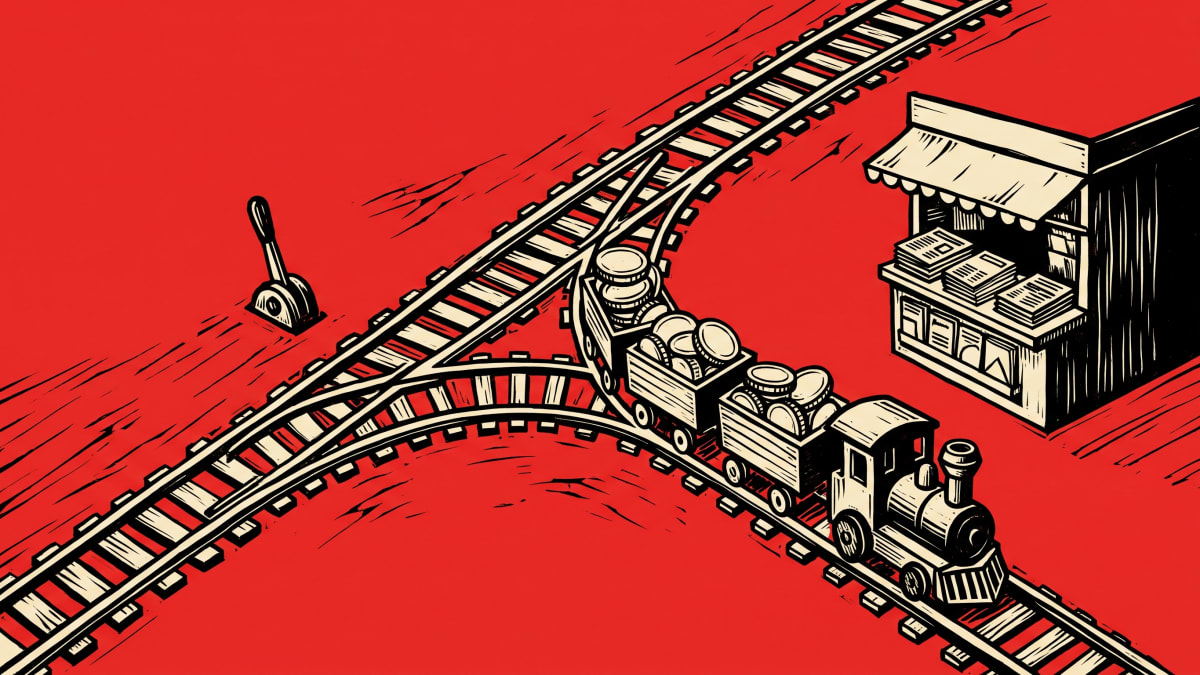
Yahoo Scout became the first AI search product to pay publishers through a collective licence run by the nonprofit Internet Licensing Collective (ILC), which counts more than 3,000 media brands as members. The launch landed as Australia's copyright debate flared again, four months after Industry Minister Tim Ayres ruled out any text and data mining exception.
KEY TAKEAWAYS
One blanket fee, royalties tied to use
The Internet Licensing Collective (ILC), a nonprofit publisher-led body, launched on 12 November 2026 and named Yahoo Scout as its first paying commercial partner.[5] One blanket licence covers AI companies, publishers keep any direct deals they already hold, and royalties flow based on how content is used inside AI products and the value it adds to the answer.[5]
More than 3,000 media brands, content owners and publishing platforms have joined the collective, and publishers can sign up for free.[5] ILC co-founder Doug Leeds said the structure was deliberately transparent: "The internet doesn't need another black-box payment experiment."[5]
What Yahoo agreed to pay
Yahoo Scout is now paying into the pool. Leeds declined to tell Digiday how much Yahoo is paying, saying only that the fee is tied to the licensee’s revenue, and Yahoo declined to be interviewed. Google and OpenAI have not signed; Leeds said ILC is in talks with “some” of the major AI companies and would not name them.[6]
A collective with 3,000 members but one paying licensee is a proof of concept. Whether the model can attract the largest AI companies, the ones whose training sets and answer engines draw on the most publisher content, will determine whether royalty pools ever reach meaningful size.
The revenue estimate behind the pitch
Mather Economics published its own analysis on the same day as the ILC launch. The firm estimates collective AI licensing could return between 15 and 35 per cent of AI company revenue to publishers, a figure Mather says could overtake the entire 2025 US display advertising market within three years.[2] That estimate is Mather's own modelling; no actual rate has been disclosed by the ILC or Yahoo, and no publisher has yet reported a payment amount.
Publishing an independent revenue estimate on launch day gives the ILC a commercial anchor that is harder for sceptics to dismiss than a press release alone. Collective licensing stops being a philosophical argument about fairness and becomes a question about how large the cheque will be.
The Australian read
The ILC launch arrived at a pointed moment for Australian publishers and their government. Industry Minister Tim Ayres said in July 2026: "We have been unequivocal about this issue, about being very clear that there'll be no text and data mining exemption for Australia. Copyright laws will not be undermined."[4] Prime Minister Anthony Albanese had made the same point a day earlier, saying no company should train AI on Australian creative works without the creator's control.[3]
Rod Sims, the former competition regulator who designed the News Media Bargaining Code, has warned the government that it risks turning Australia into a copyright “tax haven” for AI companies, the Australian Financial Review reported on 13 November. He called it “a myth” that Australian copyright law is out of step with other countries.[8]
Ayres has ruled out a training exception, and a working pay model with a named corporate partner and an independent revenue estimate attached makes the "licensing is impractical" counterargument harder to run. The ILC gives Australian negotiators a live precedent to cite if AI companies argue that collective licensing cannot work at scale.
What Australian publishers should watch now is whether Google or OpenAI sign anything similar before Canberra finalises its copyright framework.
SOURCES & CITATIONS
- ILC Launch Press Release, Internet Licensing Collective
- The Price of Intelligence, Mather Economics
- AI and Australia's Interests, Prime Minister of Australia
- Interview ABC Sydney, Minister Tim Ayres
- ILC Launches with Yahoo Scout, GlobeNewswire
- Yahoo becomes first licensee of collective AI content licensing model, Digiday
- ILC Yahoo, SE Roundtable
- AI firms trying to turn Australia into copyright tax haven, Rod Sims, AFR
FREQUENTLY ASKED QUESTIONS
What is the Internet Licensing Collective?
How much are publishers being paid through the ILC?
Will Australian publishers benefit from the ILC?
James Dore is founder and editor of Prompt the Market and Strategy Director at Bushnote, a Sydney strategy, SEO and AI search agency. He has a background in strategy, media and financial services, and led consumer product marketing at MONEYME. He writes on AI search, answer engines, technology policy and media economics.