
TLDR
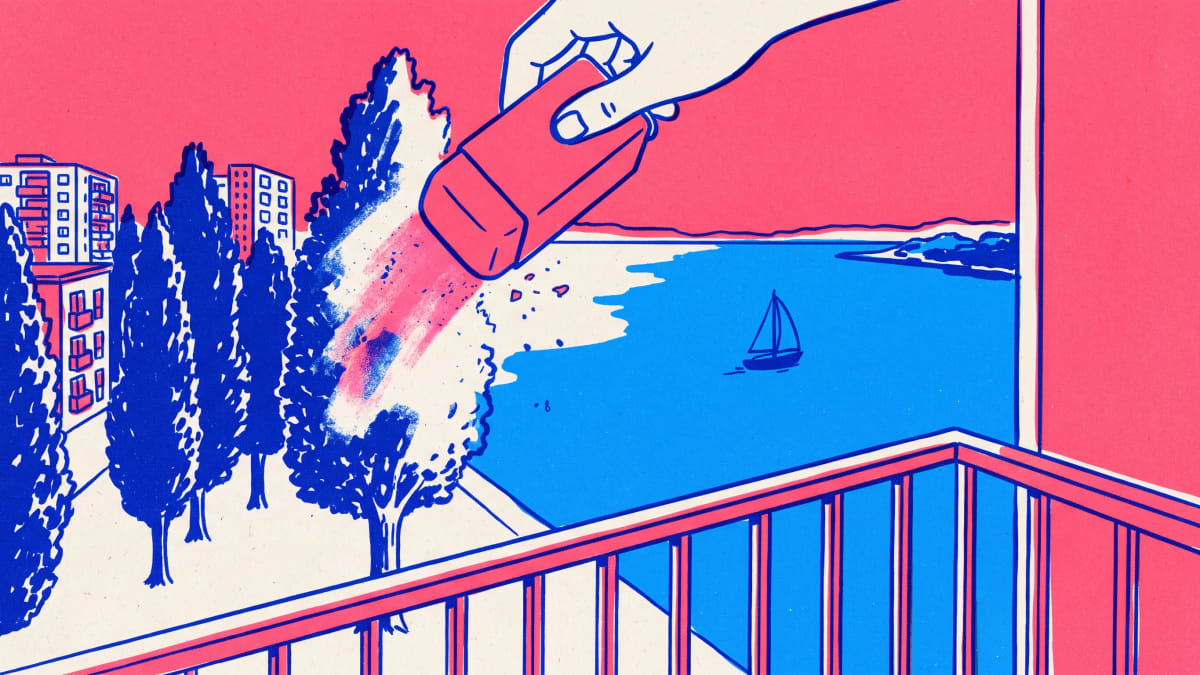
AI asked only to stage furniture in a Potts Point rental ad also shrank trees and buildings to widen the Sydney Harbour view, changes the agency says it never requested. NSW rules due in early 2027 will require disclosure of digitally altered rental photos. Under Australian Consumer Law, the final image is what counts, not the original prompt.
KEY TAKEAWAYS
What the photos showed
A two-bedroom Potts Point apartment, listed for rent in June at $1,248 a week, was advertised with a balcony photo showing more of Sydney Harbour than a 2024 photo of the same balcony, Nine.com.au reported on 13 November. Trees had been lowered and neighbouring buildings shrunk.[4] NSW Fair Trading’s advertising guidelines say agents must not modify photographs so that they no longer truthfully and fairly represent the property.[2]
When Nine ran the balcony image through a SynthID detector, it returned a positive result for OpenAI’s invisible watermark.[4]
The agency's position and the law's response
Rosalie Douglas, principal of Rosalie Douglas Real Estate, which managed the listing, told Nine she did not know AI had been used on the image until the outlet asked. After speaking to the person who edited it, she said they had not asked ChatGPT to enhance the view. “AI was only asked to generate the furnishings,” she said. A disclaimer about AI-styled furnishings ran with the ad.[4] On that account, the tool, not the operator, made the call to shrink the trees.
Australian Consumer Law does not make that distinction. Section 18 of the Australian Consumer Law bans conduct in trade or commerce that is misleading or deceptive or likely to mislead or deceive, regardless of intent.[3] What the ad communicated to a prospective tenant, not what the agent typed into a prompt, is the operative test. A furnishing-only brief does not cap what the AI changes, and the law applies to the final image.
Jeannie Paterson, professor of consumer protection law at the University of Melbourne, told CHOICE that manipulating an image of a property may be misleading and deceptive conduct, and that undisclosed use of AI adds another layer of deception.[5] CHOICE reported a similar case in Mullumbimby on 5 November: an agent used AI to clear a former tenant’s belongings from a photo, and the tool also redesigned the kitchen bench and installed a new oven and cupboards.[5]
More than 8,000 people have signed a Change.org petition by Sydney renter Caitlin Stanbury calling for genuine photographs to be the standard in property ads.[4] Queensland already requires agents to label AI-generated images, and its Office of Fair Trading can issue fines of up to $90,000 for what has become known as “housefishing”, Nine reported.[4]
Rules in force now, and what changes from early 2027
NSW Parliament passed the disclosure rule in September, and it is expected to take effect in early 2027. Landlords and agents will have to disclose when rental-ad images have been digitally altered or AI-generated to hide faults, and businesses that fail to do so face penalties of up to $22,000. Minister for Better Regulation and Fair Trading Anoulack Chanthivong called it “a strong step forward to protect renters from false information in the rental market”.[1]
The existing guidelines already rule out photos that misrepresent a property; the incoming rule adds mandatory disclosure on top. For any agency using generative fill on property or product shots, the Potts Point case puts the legal exposure in the output, not the input, with the early 2027 deadline narrowing the window between current practice and formal compliance.
SOURCES & CITATIONS
- NSW Government: Renters get landmark protections against privacy breaches and misleading rental ads
- NSW Government: Advertising guidelines for property professionals
- Australian Consumer Law, Competition and Consumer Act 2010, s 18
- Nine.com.au, Shrinking trees and growing harbour views: inside the wild west of AI real estate ads
- CHOICE, ‘Housefishing’ warning: house hunters call out real estate agents using AI images
James Dore is founder and editor of Prompt the Market and Strategy Director at Bushnote, a Sydney strategy, SEO and AI search agency. He has a background in strategy, media and financial services, and led consumer product marketing at MONEYME. He writes on AI search, answer engines, technology policy and media economics.