
TLDR
Jensen Huang's resignation from Nvidia on 12 November 2026 leaves the company selling continuity where it once sold charisma. His black leather jacket had become one of tech's most recognised personal brands, and his exit exposes a structural risk every founder-led company carries: the brand and the person become inseparable until the day they cannot be.
KEY TAKEAWAYS
The uniform and what it was worth
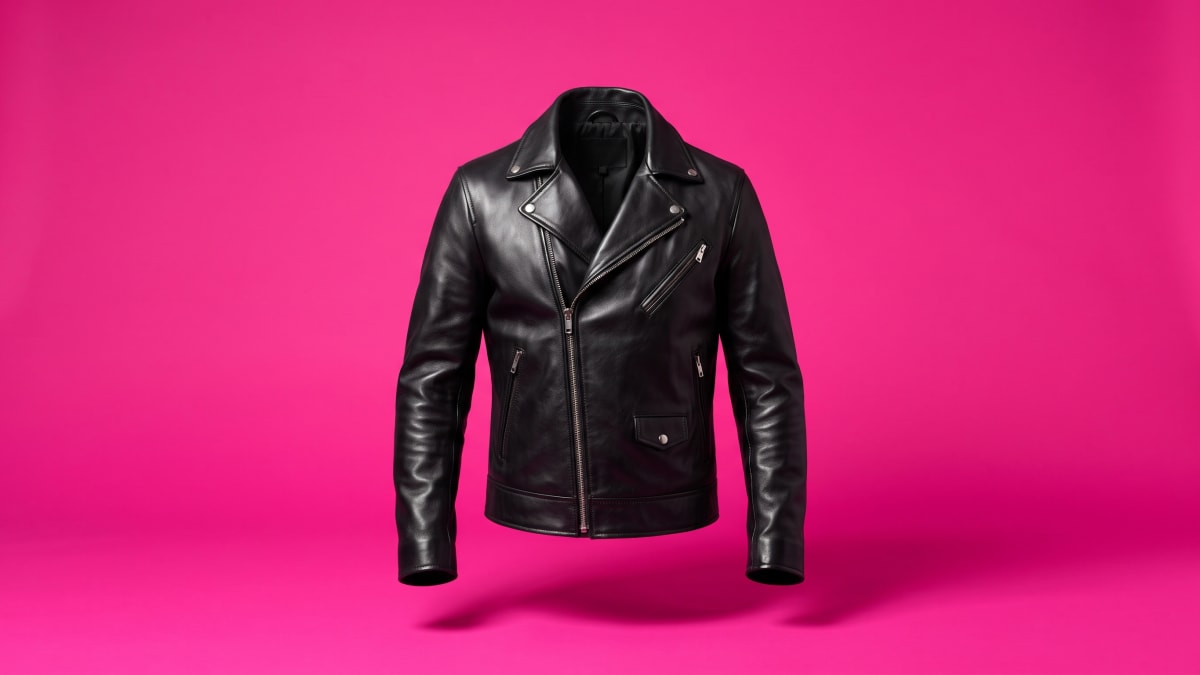
When Sotheby's listed a Tom Ford leather jacket in July 2026, the catalogue did not describe it as a garment. It called it “the uniform of a first believer”. Signed and worn by Jensen Huang, it sold for US$960,000, many times its estimate.[8][1] A piece of outerwear became a collectible because Huang had turned it into a logo.
The jacket worked because it was repeatable. Same silhouette, every keynote, every product launch. Huang told CBS he owned 30 to 40 of them.[2] As a brand device it was elegant. As a succession plan it was nothing at all.
A brand built that way puts all of its reputation in one person. Nvidia spent years building exactly that concentration, and 12 November 2026 is the day it became a board problem.
What the board inherited
On 8 November 2026, Huang emailed Nvidia staff: "I was unfaithful to my wife."[3] The board confirmed that same day it was opening an independent investigation into reporting that Huang had been a target of a foreign intelligence effort.[4]
Four days later, on 12 November, Nvidia announced that the board had accepted his resignation on 11 November, with Colette Kress named interim chief executive and Harvey C. Jones appointed board chair.[5] Wired reported that Huang had been working since at least October 2025 with Heller, a crisis communications firm whose founder, Risa Heller, is known for handling public scandals.[9]
Oliver Ellerton, director of Ellerton & Co Public Relations, drew the line between the costume and the man. “The leather jacket makes him recognisable. His judgment makes him credible,” he told Marketing-Interactive. His warning to boards was blunter: “If a company can only reassure people by saying its founder is irreplaceable, it has just described its biggest vulnerability.”[10] Dan Ives, of Yorkville Ives, cut his price target before the resignation was confirmed, writing that “the old Jensen with the black leather jacket, Godfather, AI visionary viewed as a rock star globally is over and in the past”.[11]
Nvidia's Form 8-K, filed with the United States Securities and Exchange Commission (SEC) on 12 November, confirmed the board's acceptance of the resignation on 11 November and said that Kress would hold the role while a permanent successor search proceeded.[7]
The lesson for Australian founder-led brands
Australia has its own companies built around a founder, Canva and Atlassian among them, and the Nvidia week is their case study.
Nvidia now faces the harder communications task: selling an institution to customers and investors who bought a personality. Kress takes the interim role with no equivalent personal mythology. The permanent successor search has not yet produced a name or a date.
SOURCES & CITATIONS
- Nvidia announces CEO transition, Nvidia newsroom
- Nvidia Form 8-K, SEC Edgar
- Jensen Huang email to staff, 8 November 2026, Nvidia
- Nvidia board statement on independent investigation, Nvidia
- Jensen Huang on AI development pace, CBS News
- The Jensen Jacket, Sotheby's auction listing
- Jensen Huang resigns as Nvidia CEO, CBS News
- Fast Company, How Jensen Huang’s personal brand boomeranged
- Wired, Jensen Huang hired a crisis PR firm last year
- Marketing-Interactive, Will Jensen Huang’s brand weather the latest Nvidia crisis?
- ABC News, markets live, 13 November 2026
FREQUENTLY ASKED QUESTIONS
Why did Jensen Huang resign from Nvidia?
Who is now running Nvidia?
What was the leather jacket, and why did it sell for nearly US$1 million?
James Dore is founder and editor of Prompt the Market and Strategy Director at Bushnote, a Sydney strategy, SEO and AI search agency. He has a background in strategy, media and financial services, and led consumer product marketing at MONEYME. He writes on AI search, answer engines, technology policy and media economics.