TLDR
Brandon Thomas released ArtCraft, free open-source clones of seven Adobe apps written in Rust with Claude Opus 5.5. PhotoCraft, the Photoshop equivalent, went from version 0.1.0 to 0.5.0 in about a week and passed 17,000 GitHub stars, according to OMG! Ubuntu. Thomas says the suite is not ready for professional use.
KEY TAKEAWAYS
Seven apps, one developer
Brandon Thomas, an Atlanta-based developer, has released ArtCraft, a suite of free, open-source alternatives to seven Adobe apps: Photoshop, Illustrator, Premiere, Lightroom, Acrobat Pro, After Effects and InDesign. He built them in Rust with Anthropic's Claude Opus 5.5, and in a Reddit post he said the model helped him "recreate 7 of the top Adobe apps".[1]
Each app carries its own name: PhotoCraft, VectorCraft, FilmCraft, LightCraft, PrintCraft, EffectCraft and DesignCraft.[1] PhotoCraft version 0.1.0 appeared on GitHub on 2 October; by 8 October version 0.5.0 was out and the project had passed 17,000 GitHub stars, OMG! Ubuntu reported.[2]
What PhotoCraft does
The PhotoCraft README lists 34 tools and 27 blend modes, opens and saves layered .psd files, and mirrors Photoshop's menus and shortcuts.[3] Builds are offered for Windows, macOS, Linux and FreeBSD, plus a WebAssembly version that runs in a browser.[3] That .psd support matters most for agencies and freelancers whose file libraries sit in Adobe's format.
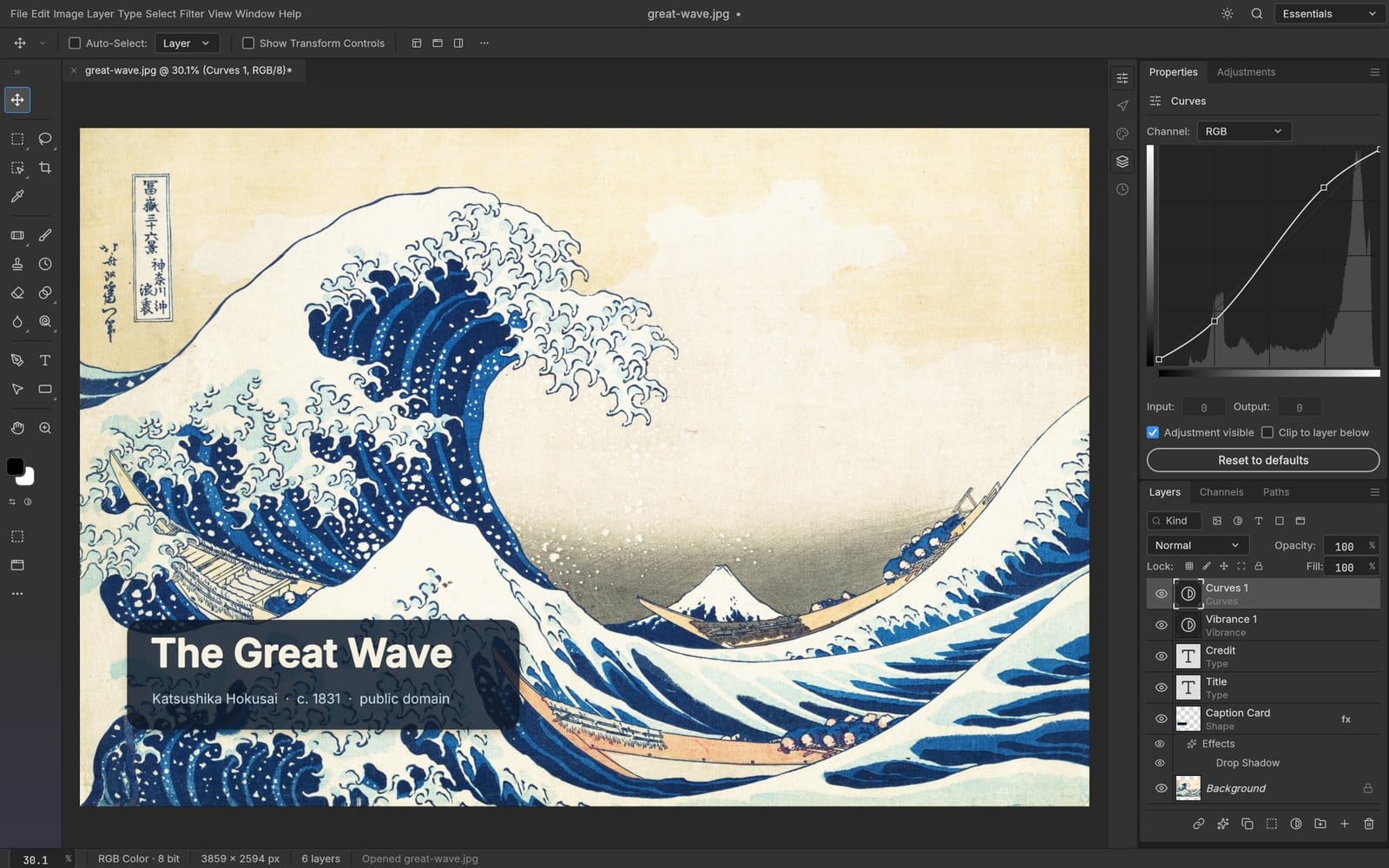
The apps are free, but the ArtCraft website sells subscription tiers for AI credits, which OMG! Ubuntu called "a little circular" given that generative features are not in the app yet. In its test on a low-powered laptop, PhotoCraft used about 5GB of RAM a few minutes after opening a .psd file.[2]
The Adobe settlement backdrop
Earlier this year Adobe agreed to a US$150 million settlement and an injunction after the US Department of Justice sued in 2024, alleging the company trapped subscribers with hard-to-cancel plans.[1] Thomas told HotHardware he was driven by Adobe's cancellation fee, which he called a dark pattern, and promised "clean-room replacements".[4]
Adobe had not publicly commented on ArtCraft in any source reports at time of publication.
Why it matters beyond Adobe
ArtCraft lands on a software sector that investors have been marking down all year on the same fear. When Adobe said in March that chief executive Shantanu Narayen would step down after 18 years, its shares were already down about 23 per cent for 2026, and software stocks globally had lost nearly US$1 trillion in value the month before on concern that AI agents could replace traditional applications, Reuters reported.[6]
By early February the iShares Expanded Tech-Software Sector ETF was down about 21 per cent, and a Jefferies trader, Jeffrey Favuzza, had labelled the slide a "SaaSpocalypse". Forbes reported that the share of SaaS companies charging per seat fell from 21 to 15 per cent in 12 months as buyers questioned paying for every head when AI does part of the work.[7] Adobe was still down 24 per cent for the year in early September.[9]
Australian software has not been spared. On 4 February local technology stocks fell 8 per cent in a morning, with Xero down 11 per cent to a two-year low and WiseTech down 6 per cent; Xero, WiseTech and Pro Medicus had lost around $50 billion in value over six months. "It feels like investors have decided AI is going to replace every software company in the world," fund manager Ron Shamgar told The Nightly.[8]
Most of that selling priced in AI agents doing the work that software seats are bought for. ArtCraft tests a different risk: one developer with a coding model rebuilding the product itself, file formats included. It is unfinished, and nobody has shown that it is legal or that professionals will switch, but any software business whose moat is a familiar interface and a proprietary file type now has a free imitation to watch.
What it means for Australian agencies and students
Australian agencies, freelancers and design students pay for Creative Cloud by the seat, every month, and software is one of the few studio costs that scales directly with headcount. A free tool that opens the same files would put pressure on that line, but only once it can be trusted on paid work.
The .psd test is the one that counts: if ArtCraft can open and save the files clients actually send, switching gets easier. Its README admits the gaps, listing plug-in compatibility and AI features among them, and says re-saved files are not byte-identical to the originals.[3] OMG! Ubuntu's verdict was that it will not replace Photoshop for professionals yet, because small differences in blending, filters and content-aware tools show up in detailed work.[2]
Thomas's own warning
Thomas has been direct about where ArtCraft stands. On Hacker News he wrote that the apps are in early alpha and "not anywhere close to ready", and he is offering bug bounties to contributors.[1] Gizmodo's tester found PhotoCraft felt like "glitchy, but real, Photoshop", with an unpredictable Free Transform tool.[1] Adobe had not commented in any of the reports.
What has changed is the cost of trying. One developer with an AI coding model released seven file-compatible rivals to a suite that took Adobe decades to build, and five releases of the flagship app in about a week.
SOURCES & CITATIONS
- Gizmodo: Someone vibe coded a free knockoff of Adobe Creative Suite
- OMG! Ubuntu: PhotoCraft is an open-source, AI-built clone of Photoshop
- PhotoCraft README on GitHub
- HotHardware: Dev uses AI to build clones of Photoshop and the Adobe suite
- tbreak: ArtCraft open-source Adobe alternatives
- Reuters via BNN Bloomberg: Adobe shares drop after CEO exit adds to AI disruption concerns
- Forbes: SaaSpocalypse now, AI is disrupting SaaS
- The Nightly: ASX technology sector decline continues as software stocks suffer rout
- The Motley Fool: Is Adobe's stock heading for $300?
FREQUENTLY ASKED QUESTIONS
What apps does ArtCraft include?
Can PhotoCraft open existing Photoshop files?
Is ArtCraft free to use?
Is ArtCraft ready for professional use?
Why did Adobe agree to a US$150 million settlement?
James Dore is Strategy Director at Bushnote, a leader in SEO and AEO in Australia. He writes on search, AI and the technology decisions shaping government and industry.