
TLDR
OpenAI's submission to Australian policymakers paired an economic investment pitch with a request to ease copyright rules for AI training. Attorney-General Michelle Rowland has rejected that request at least twice in writing, most recently in March 2026. Publishers warn the proposed exception would let multinationals train on Australian content without paying for it.
KEY TAKEAWAYS
The ask inside the pitch
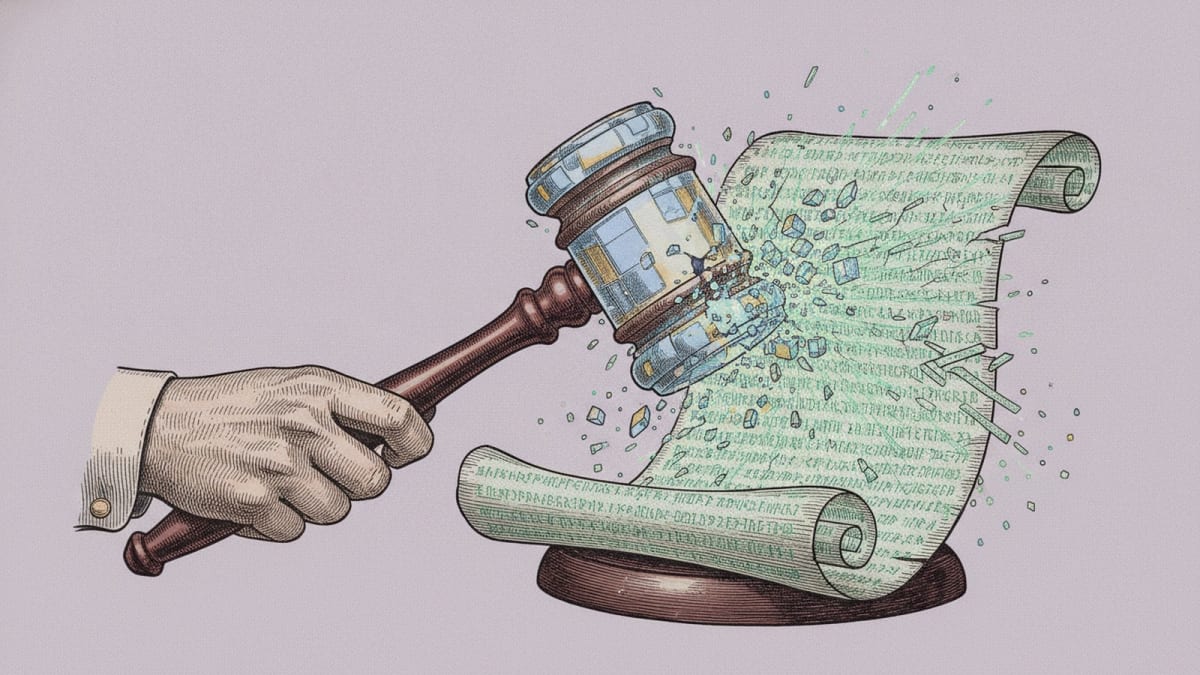
OpenAI's submission to Australian policymakers did two things at once. It outlined an economic investment case for Australia as an AI destination, and it asked the government to introduce a text and data mining exception. That exception would let AI companies train models on copyright-protected content without securing licences or paying rights holders.
Training data is what separates a capable AI model from a useless one. Australian content, journalism, creative writing, academic work, is part of the corpus these models consume. Who pays for that content, and on what terms, is the central question in every copyright-and-AI dispute running globally right now.
The government's answer
Attorney-General Michelle Rowland ruled out a text and data mining exception in October 2025, stating plainly: "This Government has repeatedly said that there are no plans to weaken copyright protections when it comes to AI."[1]
Rowland said it again at the Powering Intelligence forum in March 2026, explicitly ruling out the exception a second time.[2] The government has not softened its position since OpenAI's submission became public. OpenAI filed into a policy process where the answer was already on the record.
How the review got here
The Attorney-General's Department established the Copyright and Artificial Intelligence Reference Group, known as CAIRG, in December 2023. CAIRG brought together more than 60 stakeholders, technology companies, rights holders and independent experts, to advise on copyright challenges arising from AI development.
CAIRG published a report summarising stakeholder views on the use of copyright material as AI inputs in September 2024.[3] A transparency discussion paper followed in February 2025, inviting further input on how AI companies disclose what they train on.[4]
The October 2025 media release confirmed three priority areas for ongoing CAIRG consultation and closed the door on the exception OpenAI wanted in the same breath.[1] Three consultation rounds in under two years, and the government's direction has held throughout.
What publishers and creators said
The Copyright Agency put its position to the Australian Competition and Consumer Commission in May 2024. Its language was direct: "The Government is being asked by multinational companies that provide search services to water down Australia's copyright legislation to benefit them, at the expense of Australian society. These requests should be resisted."[5]
The Copyright Agency also said that while Google and OpenAI have entered into licensing deals for some news media content, they have not compensated all content creators whose works were used to develop their commercial AI services.[5] A text and data mining exception would formalise that gap and expand it.
For Australian publishers, journalists and creative workers, this is a concrete economic question. If the exception passed, every piece of content they have published or will publish could be legally ingested by a commercial AI model at no cost and without consent, and the revenue that funds that content does not survive that outcome.
What happens next
CAIRG's consultation is still active. The three priority areas confirmed in October 2025, transparency, attribution and remuneration, suggest the government is building toward a framework requiring disclosure and compensation rather than removing the obligation to seek either.
Rowland's remarks at the Powering Intelligence forum in March 2026 are the most recent public statement of government policy on this question. The Attorney-General's Department has not announced a date for CAIRG's next report or any legislative timetable.
SOURCES & CITATIONS
- Albanese Government to ensure Australia is prepared for future copyright challenges emerging from AI (October 2025)
- Remarks to Powering Intelligence: Media, Culture and Future Innovation (March 2026)
- Copyright material as AI inputs, questionnaire and report (September 2024)
- Copyright and AI, Transparency discussion paper (February 2025)
- Copyright Agency submission to ACCC Digital Platform Services Inquiry (May 2024)
FREQUENTLY ASKED QUESTIONS
What is a text and data mining exception?
What is CAIRG?
Has the Australian government ruled out the exception permanently?
James Dore is Strategy Director at Bushnote, a leader in SEO and AEO in Australia. He writes on search, AI and the technology decisions shaping government and industry.