TLDR
The White House banned mandatory AI licensing in June, handing safety governance to vendors via a voluntary review. Anthropic CEO Dario Amodei publicly broke with that position weeks later, demanding mandatory testing for all capable models. Australian marketers buying these tools sit in the gap between US deregulation and a local copyright review still in progress.
KEY TAKEAWAYS
What the White House ruled out
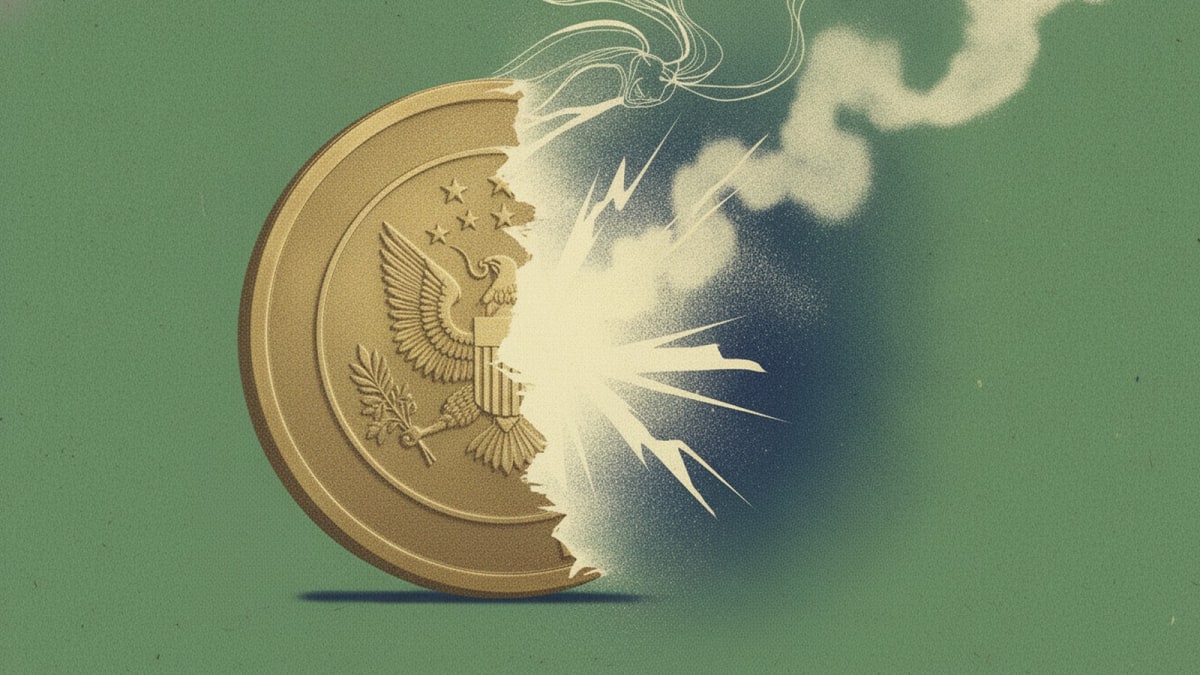
On 2 June 2026, President Donald Trump signed Executive Order 14409, titled "Promoting Advanced Artificial Intelligence Innovation and Security." The order does two things that matter for anyone buying an enterprise AI contract: it prohibits mandatory licensing or preclearance requirements for frontier AI models, and it replaces them with a voluntary framework under which developers can offer the government early access for up to 30 days before a public release.[1]
The order's preamble states the administration "we refuse to stifle this innovation with overly burdensome regulation," framing the light-touch approach as both an economic and a national security position.[1] The order also directs the Treasury Secretary, in consultation with the Director of the National Security Agency and the Director of the Cybersecurity and Infrastructure Security Agency (CISA), to stand up an AI cybersecurity clearinghouse within 30 days to coordinate vulnerability scanning with industry.[1]
Both the clearinghouse, due by 2 July 2026, and the full voluntary framework, due by 1 August 2026, have passed their deadlines. Their current status could not be confirmed in the verified research bundle.[2]
Anthropic's public break with the administration
Seven weeks after the order was signed, Anthropic CEO Dario Amodei posted a direct rebuttal to the voluntary model. On 27 July 2026, Amodei said: "All sufficiently capable models, open and closed, should go through mandatory safety testing."[3] That is a precise contradiction of an order that prohibits any such mandate.
Anthropic also used the post to clarify its position on open-weights models, the AI releases where the underlying parameters are publicly distributed and beyond any single vendor's control. The company said it opposes protectionist bans while still pushing for mandatory pre-release testing of capable systems.[3] The positions of other major AI laboratories on the voluntary framework were not confirmed in the verified research bundle.
Safety governance for the tools Australian agencies buy every day now sits with the vendors themselves, written commercially, ahead of any legislation in either jurisdiction.
The Australian read: same vendors, different regulatory clock
Australian marketers and agencies procuring frontier AI tools operate under the same vendor-written terms that apply everywhere else. Local regulators are moving, but they have not yet arrived.
The Attorney-General's Department established the Copyright and Artificial Intelligence Reference Group (CAIRG) on 5 December 2023 to consult on how copyright law intersects with AI, including the use of copyrighted material as model inputs and questions of transparency.[4] CAIRG has been consulting for more than two years and has not yet issued binding rules.
The 2026 Commonwealth Copyright Usage Survey sharpens where Australian scrutiny is headed. The survey explicitly asks government agencies whether they use copyrighted material in AI tools for prompt engineering and dataset compilation.[5] That is a regulator mapping the problem, not yet solving it.
An agency or brand signing a multi-year enterprise contract with an AI vendor today is accepting whatever safety and copyright terms that vendor has written for itself, under a US executive order that explicitly forbids mandatory alternatives. The Australian review will eventually close that gap, but as of mid-2026 it has not done so.
SOURCES & CITATIONS
- Executive Order 14409: Promoting Advanced Artificial Intelligence Innovation and Security
- Fact Sheet: President Donald J. Trump Promotes Advanced Artificial Intelligence Innovation and Security
- Anthropic's position on open-weights models
- Copyright and Artificial Intelligence Reference Group (CAIRG)
- Commonwealth Copyright Usage Survey 2026
FREQUENTLY ASKED QUESTIONS
What does Executive Order 14409 actually ban?
Why did Anthropic's CEO publicly disagree with the White House?
What is Australia's CAIRG and what has it decided so far?
What does this mean for Australian agencies signing AI contracts now?
Xaviery Malinao writes for Prompt the Market on how brands and agencies are adapting to answer engines, drawing on Bushnote's work with clients across search, AI search and content.